
Sex Offender Checks in Runnels County
The Texas Public Sex Offender Registry is the primary public search for Runnels County. Texas DPS receives data from local registration authorities and publishes the fields allowed by Chapter 62. Searchers may work from a known name or start with a place. A county filter is useful for a broad Runnels County scan. An address, city, ZIP code, or map search can narrow the view when the concern is tied to a home, school route, or neighborhood.
Registry data serves a different purpose from a court file. It identifies public registration facts, not the full motion history or every document from the criminal case. Match the name against aliases, birth date, physical descriptors, photograph, offense, and address. One shared name is not enough. If a location appears wrong or a move seems recent, report the concern to the local registration authority instead of drawing a conclusion from a single screen.
How to Search the Texas Public Sex Offender Registry
The DPS search offers several routes into the same statewide data. Begin with the narrowest reliable facts, but avoid an exact-name assumption if spelling or aliases may differ. Runnels County can be selected without knowing a street. A city search can focus on Ballinger, Winters, or Miles. Map mode works best when the question concerns a location rather than a known person.
- Open the official Texas DPS registry and choose name, address, or map mode.
- Enter a known name or location. Select Runnels as the county when a countywide result is needed.
- Review the result list and compare multiple identifiers before opening a profile.
- Read the full public profile, then contact the proper police agency or sheriff about an urgent address discrepancy.
| Field | Type | Required | Use |
|---|---|---|---|
| Name / Last Name | Mode and text | Mode-dependent | Starts a registrant-name search |
| First Name | Text | Optional | Narrows a name result |
| Address / Street | Mode and text | Mode-dependent | Finds results tied to a location |
| City | Text or choice | Conditional | Use Ballinger, Winters, or Miles |
| County | Dropdown | Optional | Select Runnels for countywide results |
| ZIP Code | Text | Optional | Narrows a geographic search |
| Map Search | Interactive map | No | Pans and zooms around a location |
Exact radius choices can change and should be read on the live form. Do not rely on an old distance setting. Save only what is needed for a lawful safety purpose, and return to the official record for current information.
Runnels County Registry Map Tools
The Texas DPS mobile application overview describes a sex-offender map and proximity feature. The captured official screen shows how DPS places registry awareness alongside other public-safety tools.
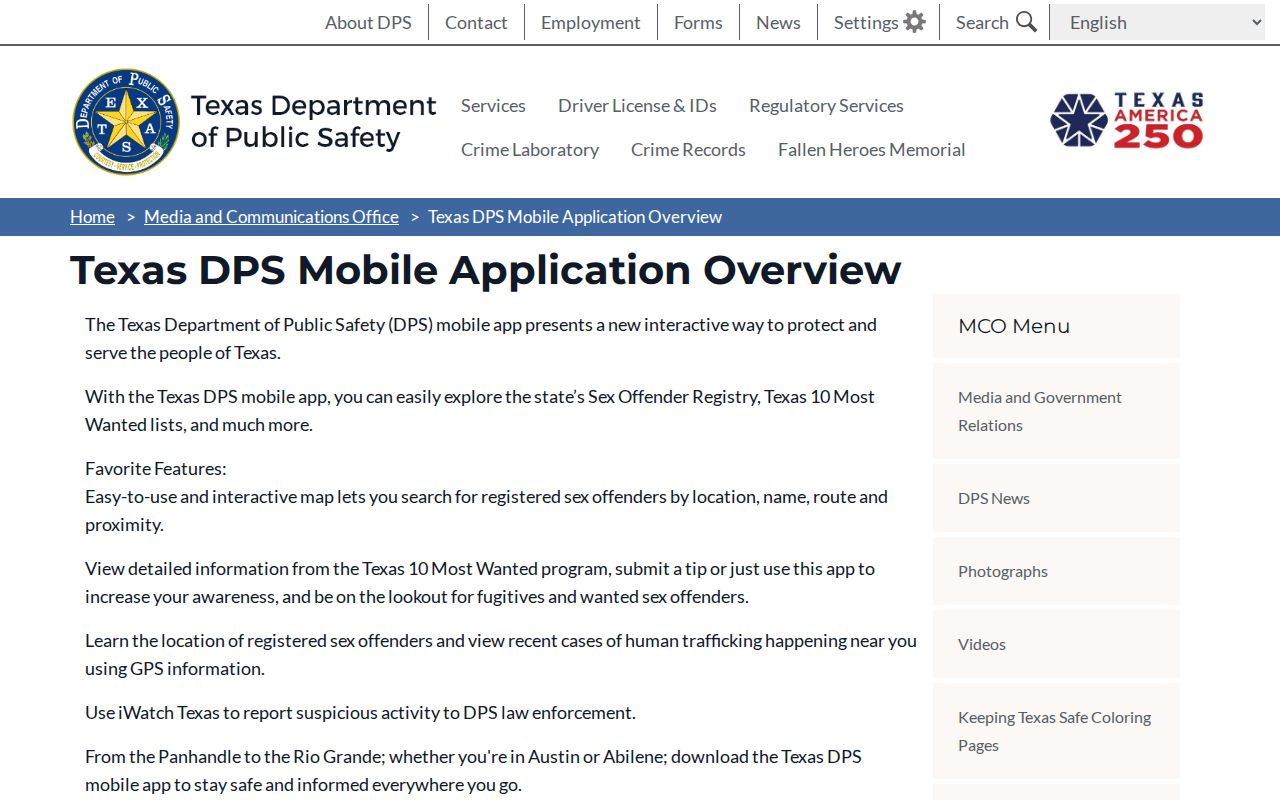
The mobile view can help with location-based awareness in Runnels County, while the full registry remains the better source for reviewing complete public profile fields.
A pin is not a finding about current conduct. Geographic results can lag a move or correction, and rural roads may not align neatly with a postal place name. Open the profile, compare its listed location, and use the correct local agency for follow-up. Emergencies go to 911. Routine concerns about an unincorporated address go to the sheriff; city-address concerns go to that city’s police.
Inside a Registry Profile
A public DPS profile combines identification, location, offense, and registration information. Its role is to help a reader distinguish one listed person from another and understand the basis of the public entry. It does not disclose every piece of data held by DPS. Protected fields remain outside the public view.
| Name and aliases | Published names used to help distinguish a possible match. |
|---|---|
| Physical description | Date of birth, sex, race, height, weight, eye and hair color, shoe size, and a photograph. |
| Registered location | Home address or geographic location, plus higher-education affiliation when applicable. |
| Offense record | Reportable offense, victim age, conviction date, punishment, and supervision or release status. |
| Risk information | Texas low, moderate, or high numeric risk assessment used for notification. |
| Specified vehicles | Vehicle data for covered trafficking offenses when the statute requires it. |
| Not publicly shown | SSN, driver-license number, phone, online identifiers, employer details, protected additions, and victim identity. |
Juvenile registration can be ordered nonpublic. Public absence therefore does not prove that no restricted record exists. For a known adult profile, compare several fields before treating it as a match.
Runnels County Registry and NSOPW
The National Sex Offender Public Website adds a cross-state search layer. The official DOJ interface is useful when a person or address may connect to more than one state.
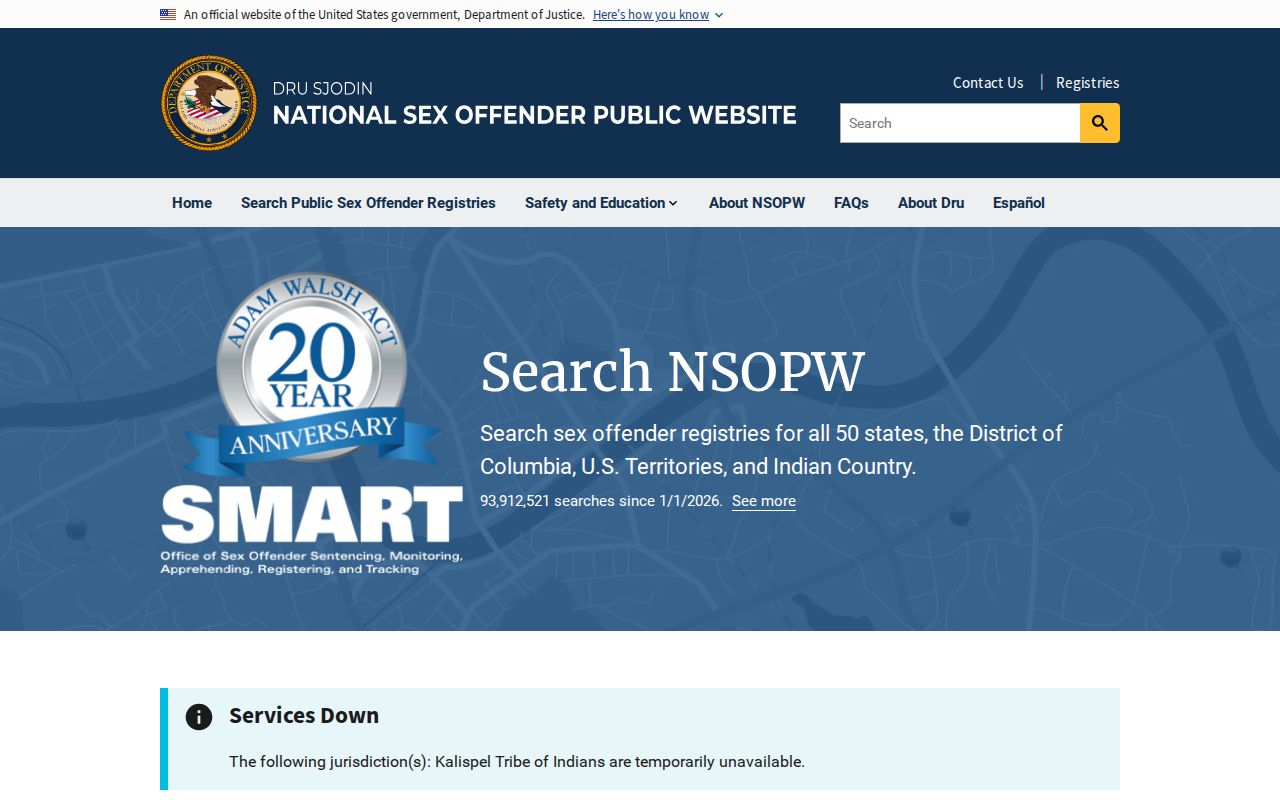
NSOPW broadens the geographic scope, but Texas DPS and the Runnels County registration authority remain the best sources for a Texas address question.
Use the tools as layers, not rivals. Start with DPS for a precise Runnels County filter and Texas profile. Use NSOPW when the search crosses a state line or a recent move raises a wider question. Then send a suspected local address error to the police department or sheriff that handles registration at that location. A national result does not replace local verification.
Texas Registration Levels and Requirements
Texas risk level and registration duration answer different questions. Low, moderate, and high are numeric risk assessments used for public notification. They are not the same as federal SORNA Tier I, II, and III labels, and the level alone does not set an end date. Duration turns on the reportable offense and the rules in Article 62.101.
| Texas category | Public meaning | Duration baseline |
|---|---|---|
| Low, moderate, or high risk | Assessment used for notification | Does not itself set duration |
| Listed lifetime offenses | Offenses named in Article 62.101(a) | Life |
| Other adult reportable convictions | Statutory non-lifetime group | Commonly ten years after the later release or supervision discharge |
| Juvenile adjudication | Special court and public-access rules | Offense and order specific |
Early termination may exist only through the specialized Chapter 62 process. The offense-specific statute must be checked before anyone states a final registration date. A public profile’s risk label should never be converted into an unsupported duration claim.
Runnels County Registry Law
The official Texas Code of Criminal Procedure Chapter 62 sets the registration, public-access, duration, notification, and misuse framework. The captured statute page is the right place to confirm current wording.
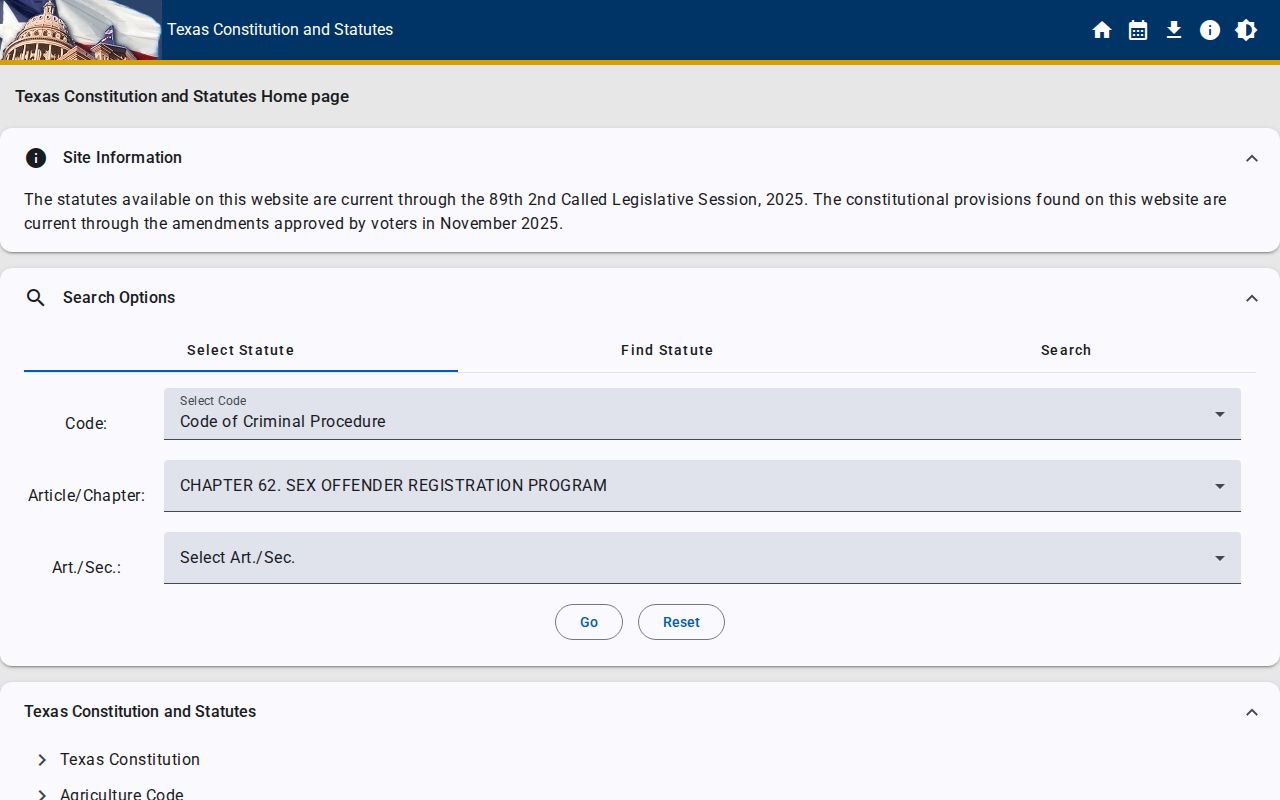
Chapter 62 explains why some profile fields are public, others remain confidential, and local authorities send registration data to DPS.
Broader records requests remain subject to the Texas Public Information Act. Its official text shows that access begins with a request for an existing government record and remains subject to legal exceptions.
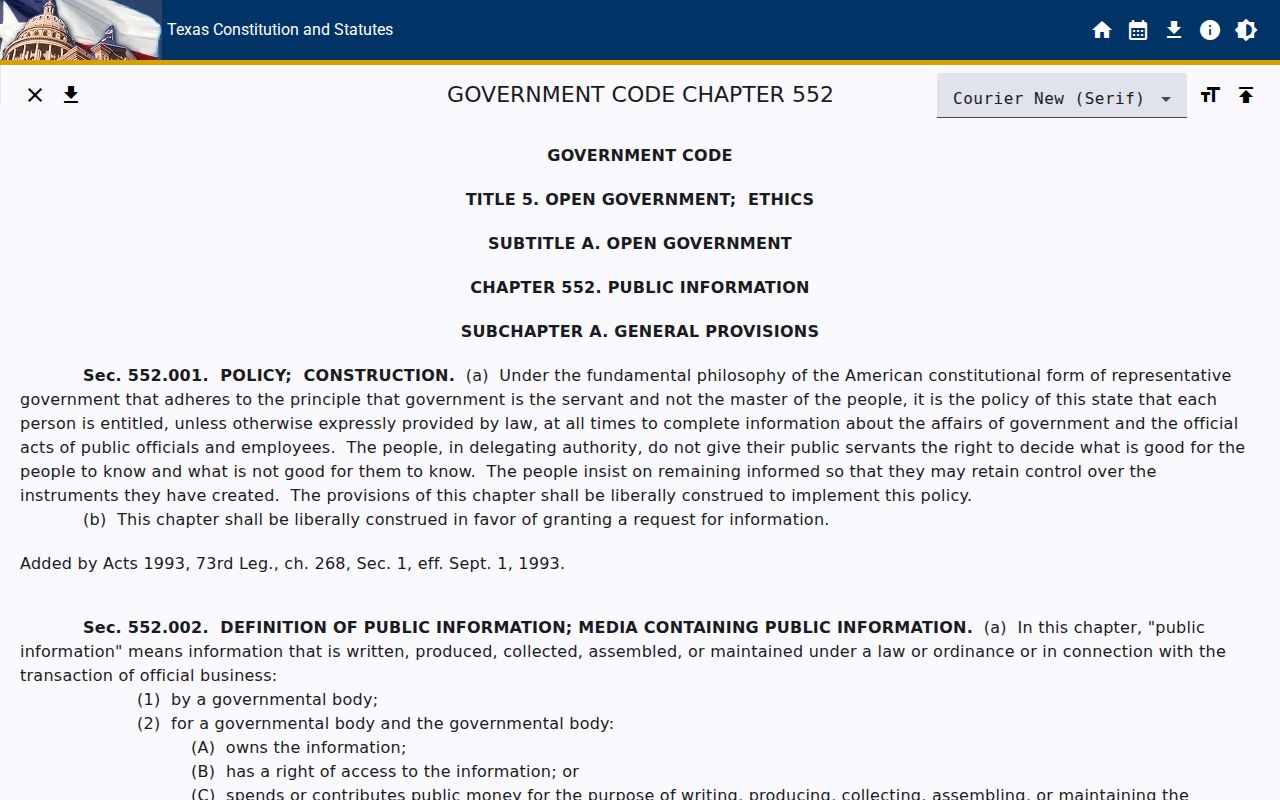
The Act does not turn confidential registry data into public data and does not require an agency to create a new answer or analysis.
Runnels County Registry Relief Limits
Registry duties and general criminal-record relief should not be confused. Expunction under Chapter 55A can remove qualifying arrest records, while nondisclosure can restrict public access to qualifying history. Neither should be assumed to end a Chapter 62 registration duty. Registry early termination follows its own specialized rules and requires offense-specific review.
The current Chapter 55A expunction law shows the separate Texas process for qualifying records.
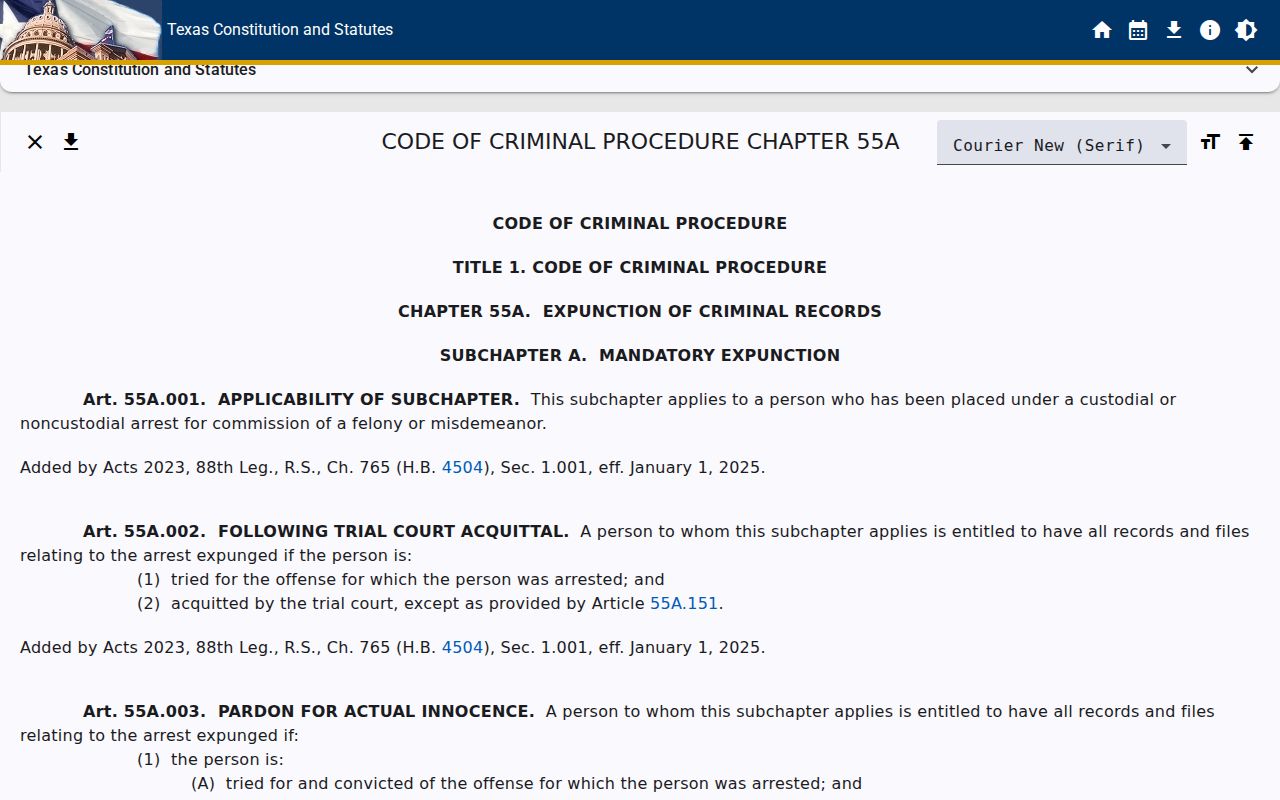
The distinct statute screens reinforce the practical rule: verify registry obligations under Chapter 62, and do not infer them from an expunction result alone.
Runnels County Registry Notifications
Local authorities keep their registries and transmit the information to DPS. Texas also provides English and Spanish postcard notice when a civilly committed sexually violent predator or high-risk registrant is released into or moves into a community. Schools can receive the notices required by statute. These channels supplement a resident’s own DPS search.
When a Runnels County profile appears inconsistent with a known address, note the public details and call the correct registration office. City police handle suspected noncompliance inside Ballinger, Winters, or Miles. The sheriff handles an unincorporated location. Do not visit the address or contact the listed person. For broader county criminal-record routing beyond registration, the Runnels County criminal history overview explains which office holds each record.
Community Notification and Lawful Use
Registry information supports personal, family, neighborhood, and community safety. It can help residents plan, talk with children about boundaries, and identify the proper agency when a profile location seems wrong. It is not proof of new conduct, and it is not permission to confront a listed person or their household. Search results may also lag a move or correction.
Misuse is unlawful: Texas Code of Criminal Procedure Chapter 62 warns that registry information may not be used to threaten, harass, or commit a crime against a registrant.
Use official channels for follow-up. Call 911 for an emergency. Send routine city concerns to the appropriate police department and rural concerns to the Runnels County Sheriff. Confirm every result at its source before relying on it.